
By ShibahSwafaw Nakaggwa
The Ministry of Health has reiterated the need for strict public adherence to Ebola prevention measures to check the spread of the deadly haemorrhagic disease.
The Ministry of Health Uganda declared the outbreak on May 15, 2026, after laboratory confirmation linked the fatal case to the Bundibugyo strain.
Health authorities say the index case involved a Congolese national who died in Kampala, triggering contact tracing and containment measures.
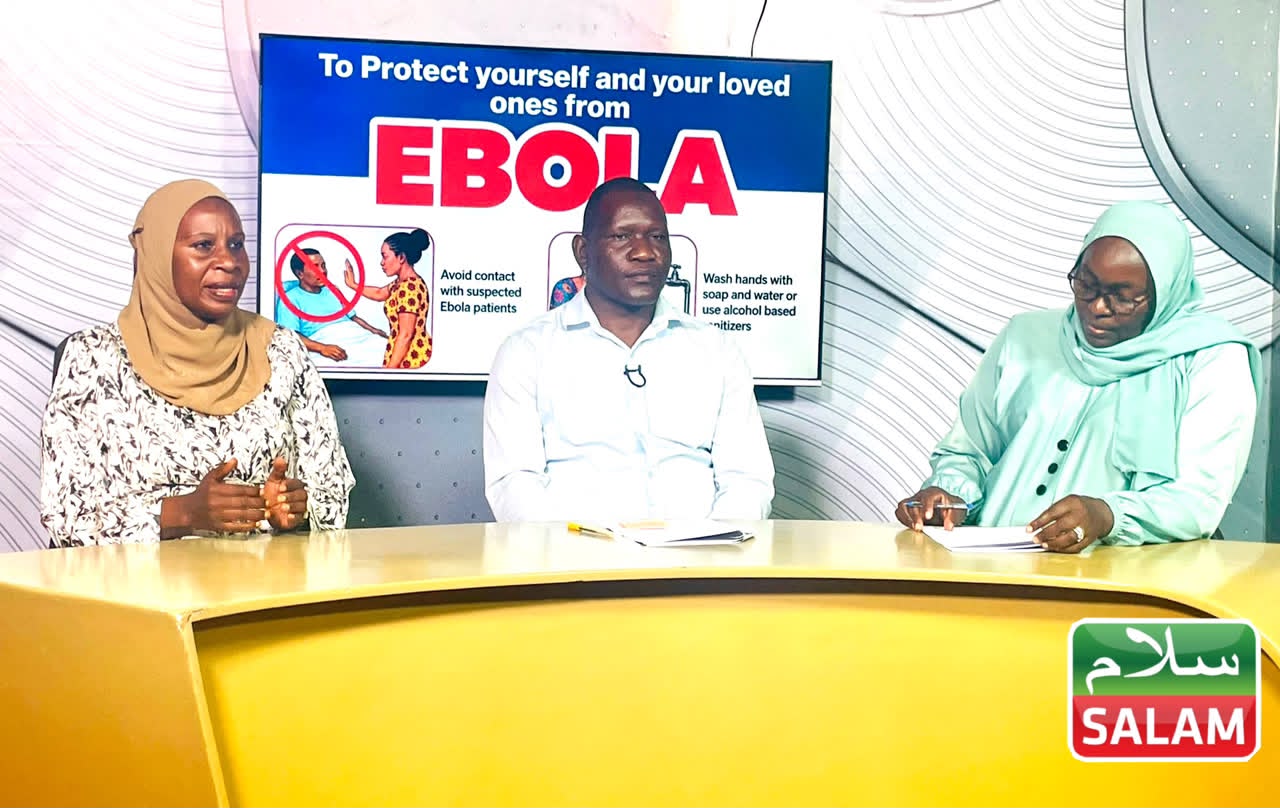
Dr Rukia Nakamatte, Behaviour Change Communication Specialist at the Ministry, said during an interview on Salam TV on June 5, 2026, hosted by Businge Mariam, that the country has so far recorded 16 active cases.
She said 11 of the cases are Ugandan nationals while five are contacts linked to the imported infection. According to her, 13 patients are currently admitted, two have been discharged, and one death has been confirmed.
Authorities have also placed 455 contacts under mandatory 21-day quarantine as part of containment efforts.
Dr Nakamatte emphasized that Ebola is transmitted through direct contact with infected body fluids, including blood, saliva, sweat, vomit, urine, and contaminated materials, adding that it is not airborne.
“You can’t get it through the air,” she clarified.
The Ministry has issued several prevention measures, urging the public to avoid contact with suspected or confirmed cases and to seek immediate medical attention when symptoms such as fever, headache, muscle pain, and bleeding appear.
Officials have also called for early reporting through toll-free lines 0800-100-066, SMS 6767, and U-Report 8500.
Other measures include regular handwashing with soap or sanitizer, wearing masks, maintaining physical distance, avoiding crowded gatherings, and restricting travel to high-risk border districts in West Nile and Kasese.
They further advised the public to observe safe burial practices and avoid contact with wild animals in affected areas.
Dr Hamid Mugole of the Uganda Muslim Medical Bureau said prevention protocols remain similar to those used during the COVID-19 pandemic, including avoiding handshakes and maintaining regular disinfection routines.
He noted that there is currently no approved vaccine for the Bundibugyo strain, stressing that community vigilance and early reporting remain critical to controlling the outbreak.
“Ebola outbreaks can be controlled and stopped when everyone follows prevention steps,” Dr Nakamatte said. “It starts with you.”
